
Research
Elucidating the Systems Governing Plant Intracellular Architecture and Spatial Organization
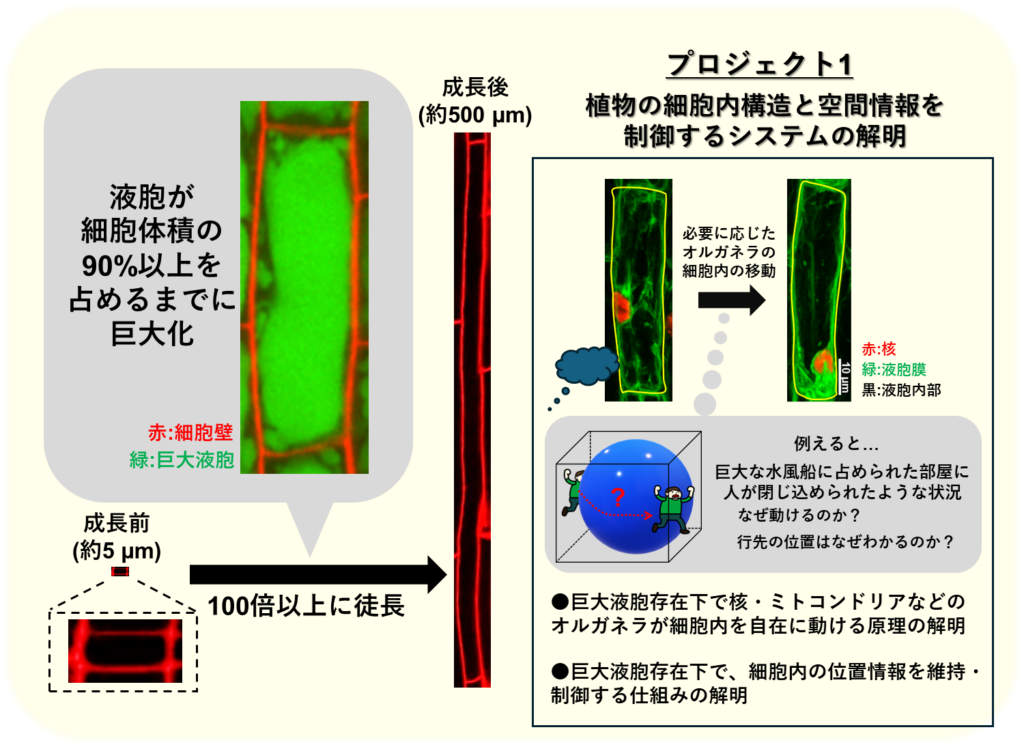
In contrast to animal cells, which change little in size after exiting the cell cycle, plant cells can expand their volume by more than one hundredfold following cell-division arrest. This remarkable cell growth is a major driver of plants’ vigorous growth capacity, which accounts for over 80% of biomass production on Earth. Our research focuses on uncovering the systems that regulate intracellular architecture and spatial information, which are essential for achieving this high growth potential.
A primary driving force behind plant cell expansion is the dramatic enlargement of the vacuole. By increasing its volume through water uptake, the vacuole generates internal pressure that pushes the cell outward. However, as the vacuole ultimately expands to occupy up to 90% of the total cell volume, its presence can also become a physical barrier that restricts the dynamics of other organelles—such as the nucleus and mitochondria. In this sense, the giant vacuole can be considered a “double-edged sword.” How plant cells cope with such massive vacuoles and maintain the spatial freedom required for other organelles remains poorly understood.
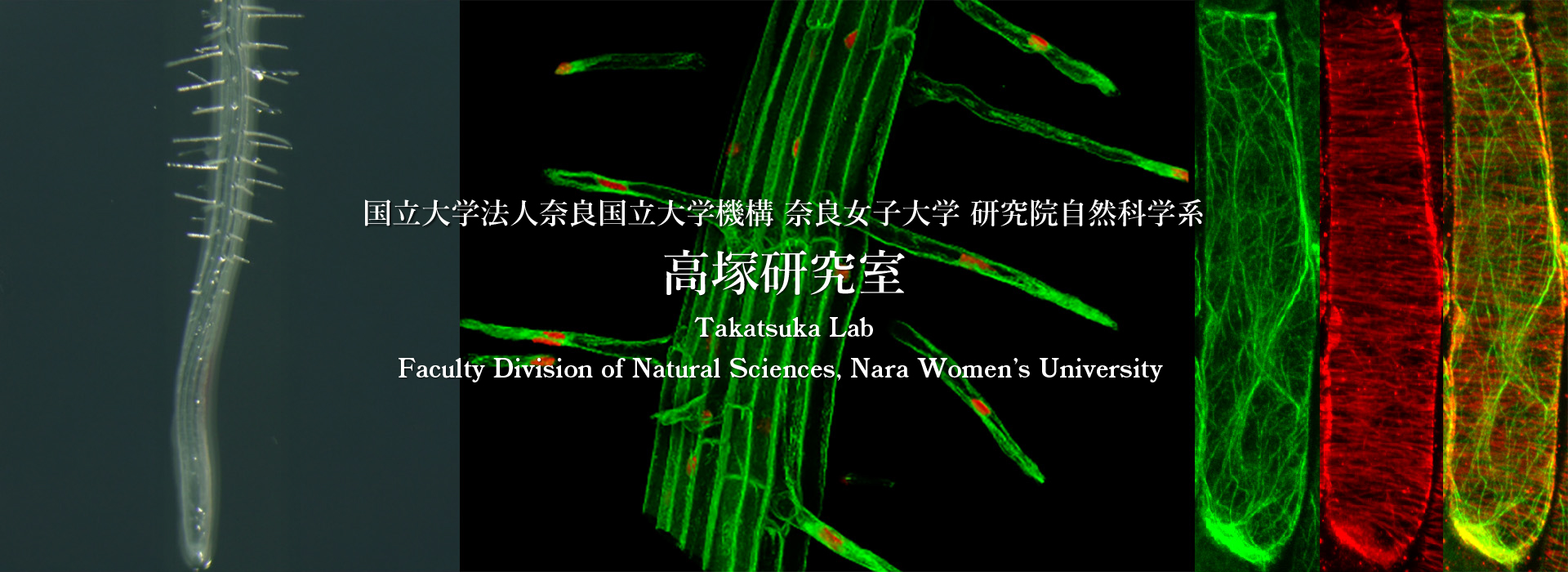
Using our original 4D imaging and image-analysis technologies, based on confocal laser microscopy, we have succeeded in capturing the rapid and dynamic structural transformations of giant vacuoles. We are currently investigating the molecular underpinnings and physiological significance of vacuolar structural regulation, with particular focus on the cytoskeletal systems that orchestrate these processes.
Unraveling the Gene Networks that Optimize Plant Cell Growth Activity in Response to Environmental Stress
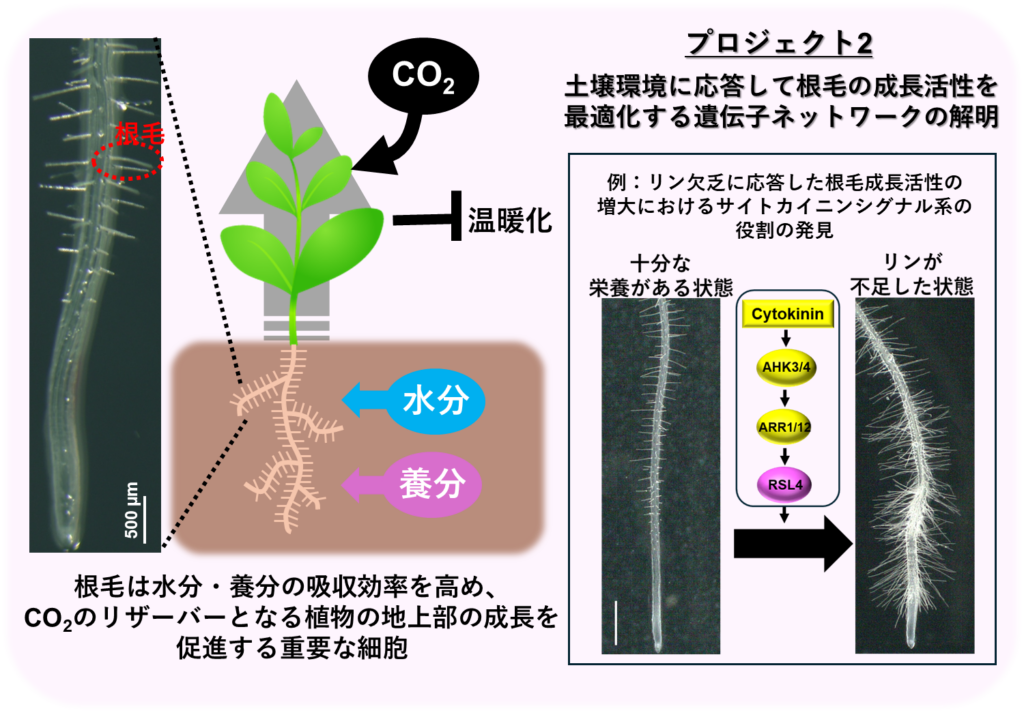
Among the many plant cell types with high growth capacity, root hairs—hair-like cells that extend from the root surface—are among the most rapidly growing. Their elongation rate exceeds 2 µm per minute, allowing them to reach lengths of more than 500 µm in just about five hours. Considering that most animal cells have a diameter of only 20–30 µm, this growth rate is truly remarkable. Root hairs play a crucial role in increasing the root surface area, thereby enhancing water and nutrient uptake. They also flexibly adjust their length in response to changing soil conditions, enabling plants to adapt to poor soils and sustain overall plant growth.
Through our collaborative work with the Umeda Laboratory at NAIST, we previously discovered that cytokinin, a plant hormone, plays an essential role in the rapid activation of root hair growth that occurs under phosphate-deficient conditions. Building on these findings, our recent research focuses on understanding how plants optimize root hair growth activity in response to soil temperature fluctuations, which are becoming an increasingly significant issue in agricultural environments. We aim to elucidate the full gene network responsible for modulating root hair growth under varying temperature conditions.
Development of Biostimulants to Enhance Plant Tolerance to Environmental Stress
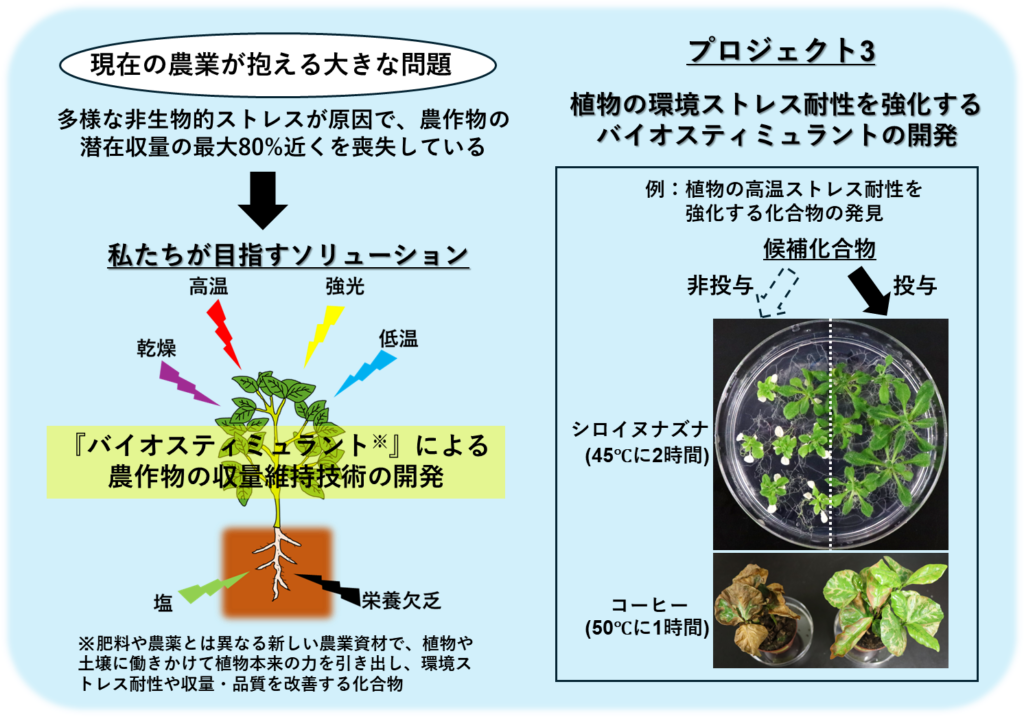
Through interdisciplinary collaboration with the field of chemistry, we are developing chemical compounds (biostimulants) that enhance plant tolerance to environmental stress.
Throughout their growth—from germination to harvest—plants are exposed to numerous stresses. These can be broadly categorized into biotic stresses, such as damage caused by pests and pathogens, and abiotic stresses, including high temperatures, drought, and salinity (see figure below). In recent years, the intensification of climate change has led to a significant increase in abiotic stresses, and conventional agricultural technologies, including breeding, have become insufficient to cope with these challenges. As a result, it is estimated that only about 20% of a plant’s inherent potential yield is ultimately realized at harvest under current agricultural conditions. Addressing abiotic stress is therefore an urgent issue for achieving sustainable agriculture.
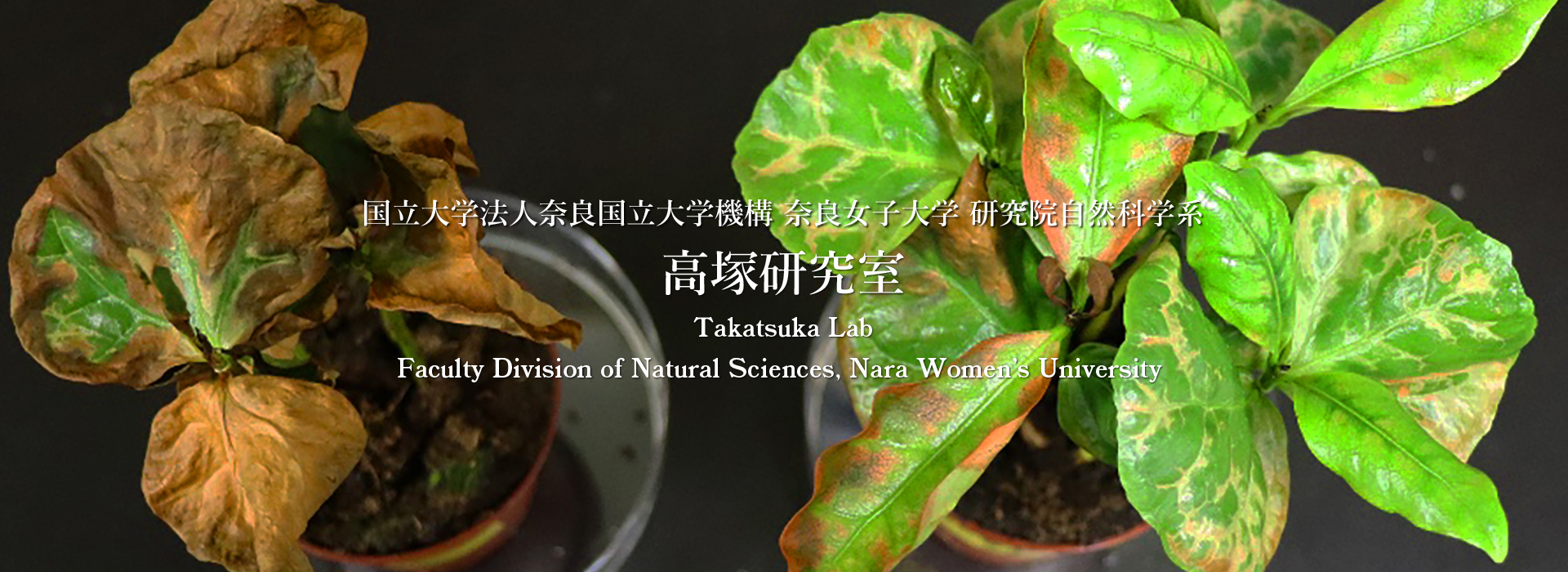
Against this backdrop, biostimulants have attracted considerable attention. These compounds act on plant physiological systems to draw out stress tolerance and are expected to serve as a new class of agricultural materials that support stable crop production under climate change. Our research focuses especially on developing biostimulants that contribute to sustainable agricultural productivity in warming environments, which are currently causing severe damage to crops. Through close integration with chemical research, we have identified promising compounds that markedly enhance plant thermotolerance. Plants pretreated with these compounds continue to grow even when exposed to extreme temperatures that cause untreated plants to bleach and die (see figure below).
(Details of the compounds are withheld prior to patent filing.)
Our compounds possess unique features not found in existing biostimulants. Leveraging these characteristics, we aim to develop truly innovative biostimulants and ultimately contribute to society through international patent applications and the establishment of a startup.
Although the startup has not yet been launched, this project has been selected as a supported company in the 13th cohort of FASTAR, an acceleration program operated by the Organization for Small & Medium Enterprises and Regional Innovation, Japan (SME Support, Japan). We are currently preparing for commercialization and startup formation.
If you are interested in this technology, please feel free to contact us at:
h-takatsuka(at)cc.nara-wu.ac.jp
(Please replace (at) with @)
Related link: